
 By Winztro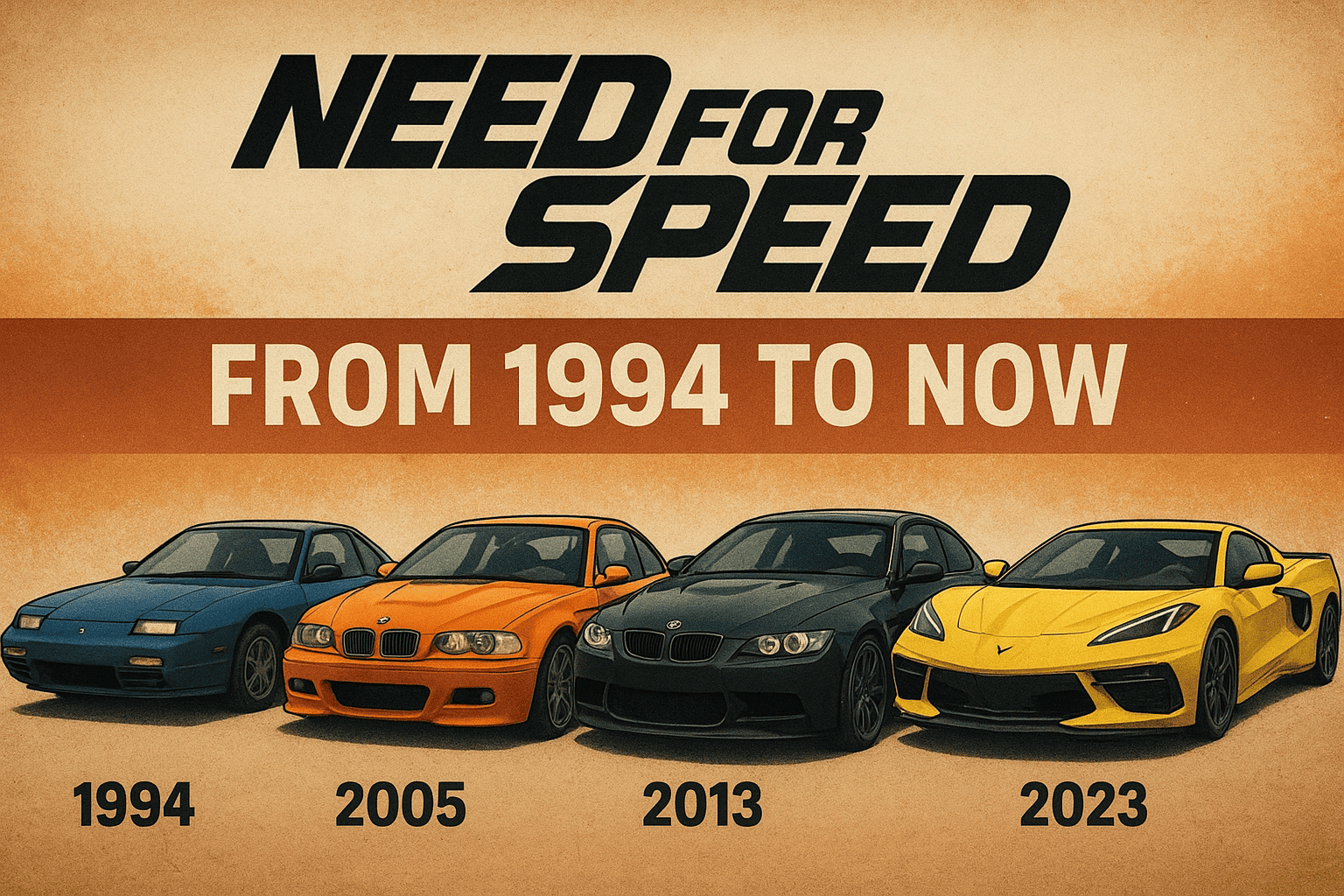
Do you remember that feeling when you came home from school, dropped your backpack, and instantly rushed into that neon-lit city to race your customized car?
Do you remember those police chases, that adrenaline rush something you can’t explain but you still feel?
Do you remember those police chases, that adrenaline rush something you can’t explain but you still feel?
But today… People have almost forgotten that series.
What exactly happened that a franchise at its peak suddenly fell so hard?
Can Need for Speed: From 1994 to Now ever return to its old glory?
What exactly happened that a franchise at its peak suddenly fell so hard?
Can Need for Speed: From 1994 to Now ever return to its old glory?
Well, today, we’re time-traveling back to witness the journey of how Need for Speed once defined the racing genre… and then slowly lost its shine.
So fasten your seatbelts, because today we’re talking about The Rise and Fall of Need for Speed: From 1994 to Now a story where there was speed… but somewhere along the way, the control slipped.
So fasten your seatbelts, because today we’re talking about The Rise and Fall of Need for Speed: From 1994 to Now a story where there was speed… but somewhere along the way, the control slipped.
And brother, videos like this take real research and effort, so please drop a like, and comment your favorite Need for Speed game!
THE BEGINNING — 1990s
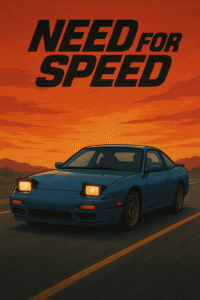
The story of Need for Speed: From 1994 to Now begins in the 1990s, when EA had a simple dream:
To create a game that didn’t just show racing, but made players feel like they were driving real cars.
To create a game that didn’t just show racing, but made players feel like they were driving real cars.
To achieve this, they partnered with the famous car magazine Road & Track, and that’s where the idea of The Need for Speed truly began.
In 1994, the first NFS game was released, and its biggest strength was realism and detailing.
With Road & Track’s help, EA captured how real cars moved, sounded, and behaved.
With Road & Track’s help, EA captured how real cars moved, sounded, and behaved.
But developing the original NFS for the 3DO and PlayStation wasn’t easy.
Even with powerful hardware, the frame rate sometimes dropped to 20 FPS.
Even with powerful hardware, the frame rate sometimes dropped to 20 FPS.
The game first launched on 3DO, then PlayStation and PC—and critics praised it for its graphics, licensed cars, and thrilling police chases.
EA knew they had created not just a simulator… but a blockbuster franchise.
Its success set a new standard in the racing genre—and the series was on its way to dominating the industry.
Its success set a new standard in the racing genre—and the series was on its way to dominating the industry.
THE GOLDEN ERA BEGINS
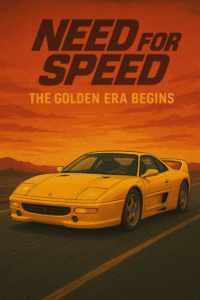
By the late 90s, Need for Speed: From 1994 to Now had built a strong identity.
Some people even called it “The Fast and Furious Game” because the rise of flashy cars, illegal street races, and high-energy action had taken over pop culture.
Some people even called it “The Fast and Furious Game” because the rise of flashy cars, illegal street races, and high-energy action had taken over pop culture.
EA struck at the perfect moment.
In 1998, Need for Speed III: Hot Pursuit arrived—and it was a game-changer.
The cop vs racer gameplay took center stage.
This is the game many of us still play today.
The cop vs racer gameplay took center stage.
This is the game many of us still play today.
Hot Pursuit even lets you play as a cop for the first time.
Roadblocks, spike strips, and smart AI made the chases intense and tactical.
Roadblocks, spike strips, and smart AI made the chases intense and tactical.
NFS had found its signature.
But one question lingered:
Is NFS a sim racer or an arcade racer?
Is NFS a sim racer or an arcade racer?
EA now had two paths:
Realism… or pure adrenaline.
Realism… or pure adrenaline.
In 2000, they experimented with realism with NFS: Porsche Unleashed, which is still respected by fans.
But in 2002, EA Black Box delivered Hot Pursuit 2, often considered the best classic NFS—with perfect physics, handling, and police action.
But in 2002, EA Black Box delivered Hot Pursuit 2, often considered the best classic NFS—with perfect physics, handling, and police action.
But this… was only the calm before the storm.
2003–2006: The STREET RACING EVOLUTION
The next era of Need for Speed: From 1994 to Now was a complete transformation.
In 2003, inspired by the Fast & Furious craze and the growing tuner culture, EA Black Box delivered:
Need for Speed Underground (2003)
Need for Speed Underground 2 (2004)
Need for Speed Underground 2 (2004)
These two games changed the franchise forever.
Tuner cars, neon streets, heavy customization—this was fresh and exciting.
Underground introduced deep customization: engine mods, body kits, spoilers—everything.
Underground introduced deep customization: engine mods, body kits, spoilers—everything.
Underground 2 expanded it with open world, free roam, and iconic soundtracks.
Even today, songs like Riders on the Storm hit different.
Even today, songs like Riders on the Storm hit different.
Then came the KING.
2005 — THE PEAK: NEED FOR SPEED MOST WANTED
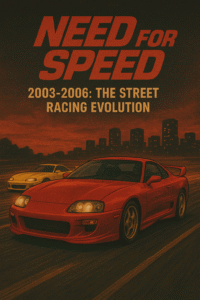
Most Wanted combined the best of the franchise:
Police chases + street racing + customization + an amazing story.
Police chases + street racing + customization + an amazing story.
The open world of Rockport City, the blacklist rivals, and the legendary BMW M3 GTR—everything was iconic.
It sold over 18 million copies.
Even in the timeline of Need for Speed: From 1994 to Now, this is widely seen as its peak.
Even in the timeline of Need for Speed: From 1994 to Now, this is widely seen as its peak.
But success brought pressure.
Black Box was making a new game every year… and the burnout was starting.
Black Box was making a new game every year… and the burnout was starting.
THE DOWNFALL BEGINS (2006–2012)
After Most Wanted, things got messy.
✔ 2006 – NFS Carbon
Good game, but felt repetitive.
Good game, but felt repetitive.
✔ 2007 – NFS Pro Street
A shift to realism that fans didn’t like.
A shift to realism that fans didn’t like.
✔ 2008 – NFS Undercover
Rushed, buggy, disappointing.
Rushed, buggy, disappointing.
EA’s CEO even admitted the team was burned out.
✔ 2009–2012
The most unstable period of Need for Speed: From 1994 to Now.
The most unstable period of Need for Speed: From 1994 to Now.
EA gave the series to Criterion.
Fans were split between realism (Shift), arcade chaos (Hot Pursuit 2010), and street racing (which no one was making anymore).
Fans were split between realism (Shift), arcade chaos (Hot Pursuit 2010), and street racing (which no one was making anymore).
Identity lost.
Then NFS The Run came—ambitious but flawed.
Sales dropped hard.
Sales dropped hard.
In 2013, EA shut down EA Black Box… and with that, the golden era ended.
IDENTITY CRISIS (2013–2019)
✔ 2012 — Most Wanted Reboot
A disaster.
A disaster.
✔ 2013 — NFS Rivals
Beautiful but forced always-online.
Beautiful but forced always-online.
✔ 2015 — NFS Reboot
Good style, terrible handling.
Good style, terrible handling.
✔ 2019 — NFS Heat
A solid attempt, but not enough to revive Need for Speed: From 1994 to Now.
A solid attempt, but not enough to revive Need for Speed: From 1994 to Now.
2020–2025: THE FINAL BREAKDOWN
EA restructured again.
✔ 2022 — NFS Unbound
Stylish but divisive.
Sales down 64%.
Stylish but divisive.
Sales down 64%.
✔ 2023–2025
Criterion staff moved to Battlefield
Speed Hunters shut down
Rival’s servers closed
February 2025 → NFS development paused
August 2025 → Criterion became a Battlefield studio
Criterion staff moved to Battlefield
Speed Hunters shut down
Rival’s servers closed
February 2025 → NFS development paused
August 2025 → Criterion became a Battlefield studio
Need for Speed: From 1994 to Now was officially in hibernation.
IS NEED FOR SPEED FINISHED?
Not yet.
Industry reports say:
A new NFS may be released in 2027 or 2028
with a brand-new team.
with a brand-new team.